Laser Tattoo Removal
Fade Unwanted Ink. Reveal Clearer Skin.
Advanced laser technology delivers short pulses of energy that break the tattoo ink into tiny particles. Your body's natural immune system gradually removes these particles over the following weeks.
Book Your Consultation Today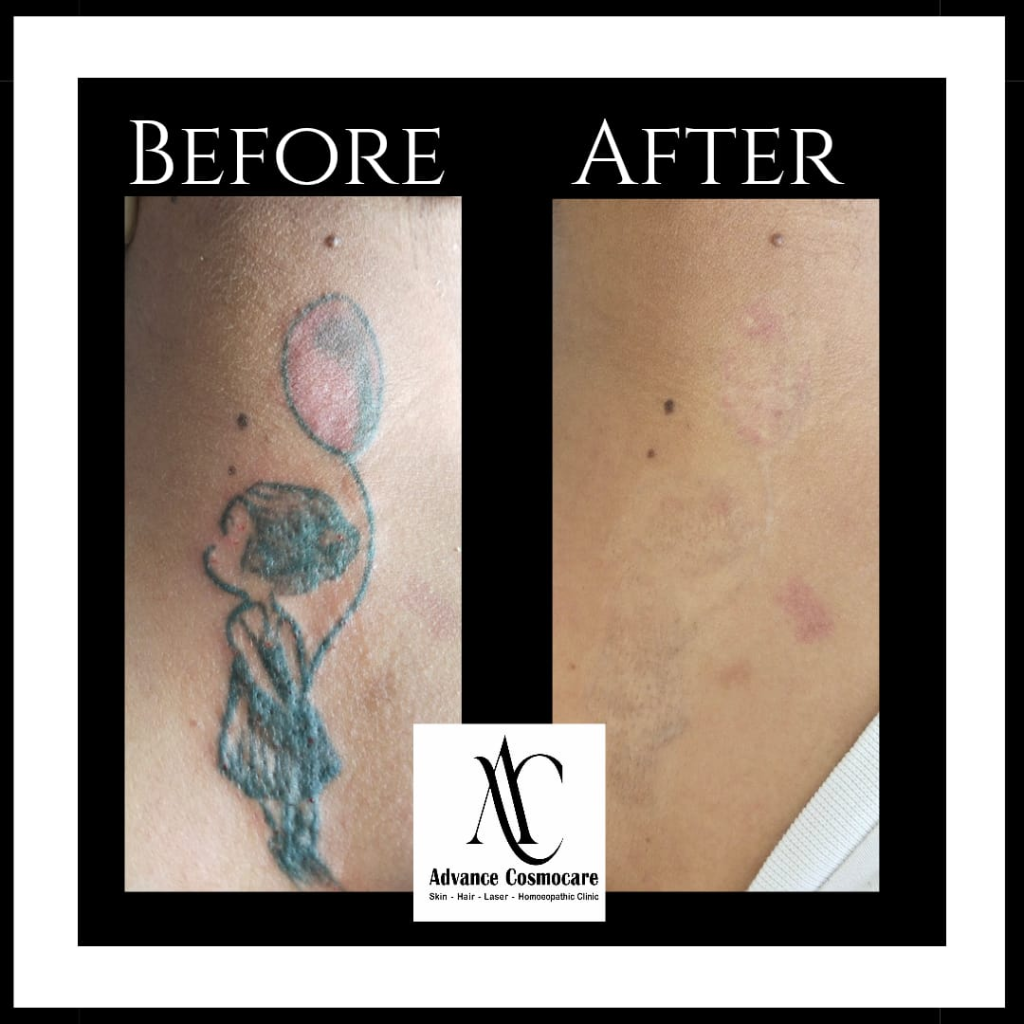
Clinical Benefits & Treatment Scope
Learn how medical-grade laser systems shatter ink pigment while protecting your skin barrier.
Benefits of Laser Removal
Targets Ink with High Precision
Laser wavelengths selectively target tattoo pigments without heating adjacent healthy tissue.
Safe and Gradual Clearance
Breaks ink down into micro-particles that are safely cleared away by your lymphatic system.
Minimizes Scarring Risks
Non-invasive energy pulse parameters are regulated carefully to preserve skin integrity.
Fades Colors and Dark Outlines
Equipped to address black, dark blue, red, and multi-colored tattoos effectively.
Enables Lightening for Cover-ups
Lightens existing tattoos, giving cover-up tattoo artists a clean, workable surface.
Professional Medical Supervision
Every session parameters are chosen and monitored directly by Dr. Ankita Patel.
Best For
Ideal Treatment Conditions
Session Information
How Advanced Laser Tattoo Removal Works
We leverage advanced energy-based Q-switched lasers to safely target tattoo pigments at different depths.
Selective Wavelengths
Specific wavelengths of laser light are absorbed only by the target ink colors in the dermis, keeping surrounding skin structures safe.
Energy Pulses
The laser delivers short, high-energy pulses in nanoseconds. This speed shatters ink particles into a micro-dust format without causing heat damage to outer layers.
Natural Immune Fading
Once broken down, the body's natural scavenger cells (macrophages) ingest the micro-particles and carry them away via the lymphatic system over the next 6 to 8 weeks.
Your Treatment Journey
Every clinical laser session is conducted under strict safety guidelines for comfortable, optimal outcomes.
Clinical Evaluation
Dr. Ankita Patel evaluates the age, depth, density, and colors of your tattoo to design a custom laser protocol.
Skin Preparation
The target area is cleansed. A topical anesthetic numbing cream can be applied to ensure maximum comfort during the session.
Laser Application
Laser energy pulses sweep across the tattoo outlines. You will see a temporary "frosting" effect, indicating the ink particles have broken apart.
Soothing & Cooling
A soothing clinical ointment and a cooling pad are applied immediately to calm warmth, reduce redness, and protect the skin barrier.
Post-Session Protection
A medical bandage or sterile dressing is applied, along with instructions on moisturizing and sun protection to ensure healthy healing.
Frequently Asked Questions
Everything you need to know about the treatment process, comfort, and efficacy.